Rapsody’s Afro-Soaked Revelation
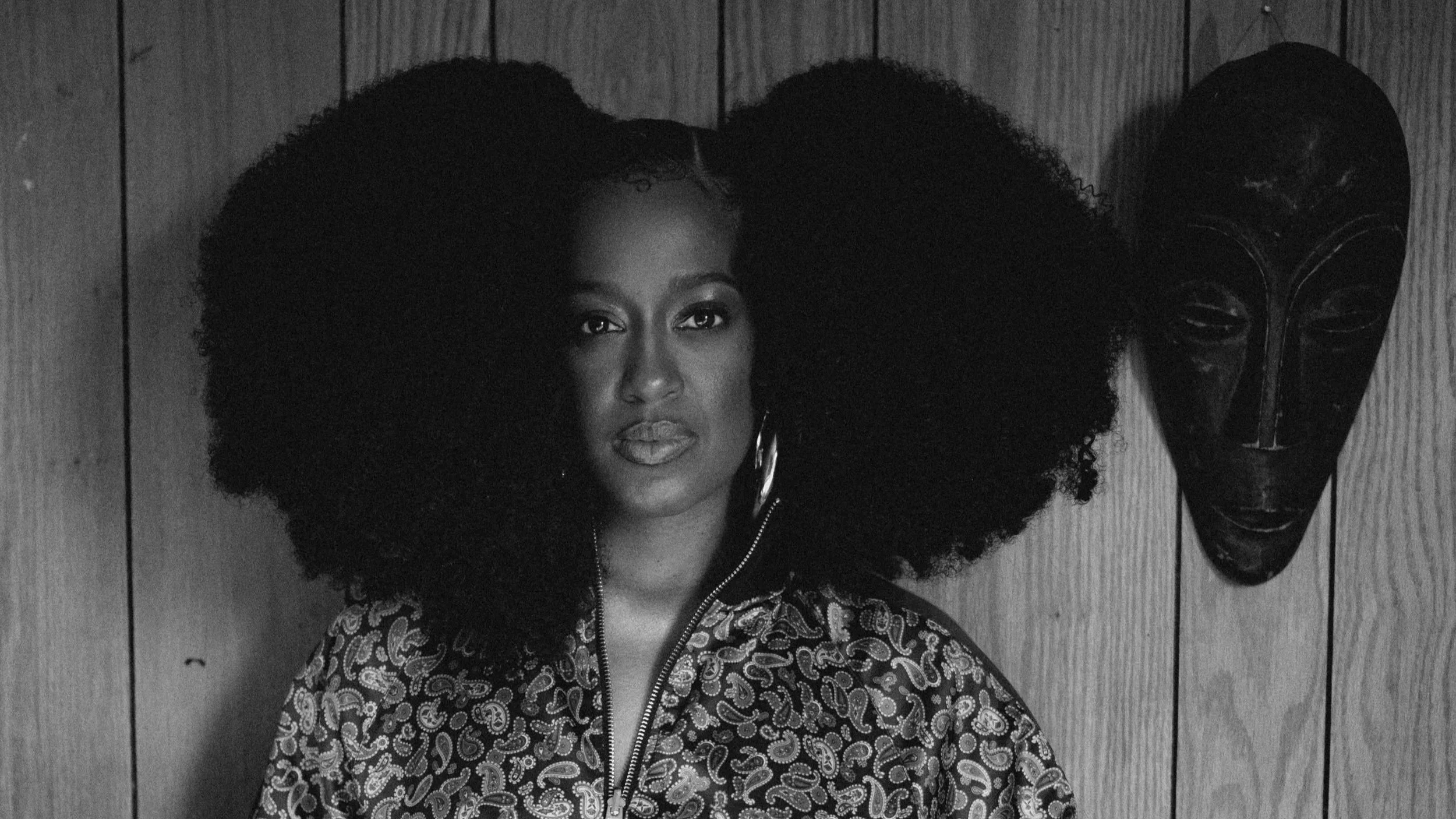
There is something almost funny about still calling Rapsody underrated.
At some point, we have to admit the problem is not that people do not know she can rap. Everybody who matters knows. Kendrick Lamar knows. J. Cole knows. Lil Wayne knows. Erykah Badu knows. The Grammys know. The question has always been whether the larger culture was willing to make enough room for a woman whose greatest weapon was never spectacle, controversy, or sex appeal.
It was the pen. And Rapsody has one of the nastiest pens in hip-hop.
But her new album, God Gotta Afro & Gold Hoops, makes an even stronger argument. Rapsody is no longer interested in proving she belongs in conversations about great lyricists. That debate is boring now. She is after something bigger: who gets to define Blackness, beauty, spirituality and the culture itself. That's where things get interesting.
Released August 21, the 16-track album follows 2024's deeply personal Please Don't Cry. That record cracked Rapsody open. She talked about relationships, sexuality, insecurity, anxiety, body image, and the exhausting expectations placed on women in hip-hop. It was less "look how well I can rap" and more "here is who I actually am."
God Gotta Afro & Gold Hoops feels like what happens after you survive that conversation with yourself. Now she is looking outward. The album was largely written and recorded in Africa, with Rapsody spending significant time on the continent, including Ghana and Johannesburg. Instead of treating Africa like aesthetic wallpaper, she lets the experience interrogate her ideas about faith, ancestry and identity. Even the title carries a challenge.
Rapsody has explained that the idea behind God Gotta Afro & Gold Hoops is about looking at yourself and recognizing the divine. If every image of holiness you've been handed looks nothing like you, maybe the problem isn't you. Maybe somebody else controlled the paintbrush. That's a hell of a premise for a rap album. And Rapsody actually commits to it.
"God Gotta Afro" isn't subtle. It isn't supposed to be. It's affirmation with drums underneath it. On "OMG! (Love to Sun Ra)," she reaches toward Afrofuturism with George Clinton, Jojo Abot and Nomisupasta, connecting generations of Black experimental thought without turning the song into a history lesson.
Then there's "Apple Juice," which pulls from the warmth of D'Angelo's "One Mo' Gin." Rapsody sounds loose here, almost playful. That's important because one of the lazy criticisms leveled at technically gifted rappers is that lyrical excellence automatically implies seriousness. Rapsody has spent years destroying that idea.
She can rap-rappity-rap with anybody alive.
She can also make something feel good.
"Black Love," featuring Malice, moves differently. It's reflective, proud, and grounded in the complicated reality of loving Black people in a world that has historically found endless ways to tell them not to love themselves.
And then Rapsody gets confrontational.
On "No Way," she aims media figures who profit from hip-hop while standing at a comfortable distance from the consequences of the culture they cover. It's the kind of critique that carries more weight when it comes from someone who has spent nearly two decades actually building in hip-hop rather than commenting from the sidelines.
That distinction matters.
Rapsody's career has always been about substance, but substance is sometimes treated like medicine in hip-hop. Something respectable that we're supposed to consume because it's "good for us."
Forget that. Rapsody is fun to listen to. Her internal rhymes snap. Her references reward people paying attention. She can move from cultural criticism to a punchline without putting on her turn signal. Her voice sits inside a beat instead of fighting against it. That's why reducing her to "conscious rap" has always felt lazy. She is simply a rapper with something to say. There's a difference.
Her evolution becomes even clearer when you put this album beside Please Don't Cry. That project included "3" with Erykah Badu, "Raw" with Lil Wayne, "Asteroids," "DND (It's Not Personal)" and "Look What You've Done." It was Rapsody confronting Marlanna Evans, the woman underneath the reputation.
The new album feels like Marlanna walked out of that room knowing exactly who she was. That confidence has been earned. Rapsody started in North Carolina with Kooley High before developing under the mentorship of 9th Wonder and eventually becoming one of the most respected MCs of her generation. She appeared alongside Kendrick Lamar on "Complexion (A Zulu Love)," earned acclaim for Laila's Wisdom, and built Eve around Black women including Nina Simone, Aaliyah, Afeni Shakur, and Serena Williams. She has been telling us what matters to her for years. Maybe we are finally listening differently.
And that's why God Gotta Afro & Gold Hoops feels perfectly timed.
Hip-hop is having a complicated conversation with itself right now about ownership, authenticity, algorithms, commercialization, and who gets to tell its stories. Rapsody's response isn't another podcast argument.
It's an album.
One rooted in Africa, Black imagination, spirituality, family, history, joy and the radical idea that Black people should be able to see themselves as sacred.
That's not nostalgia.
That's reclamation.
Rapsody doesn't need to be "the best female rapper." Kill that category already. She's one of the best rappers working. Period.
And God Gotta Afro & Gold Hoops sounds like an artist who has finally stopped worrying about whether everybody else understands that.
Good.
They'll catch up.