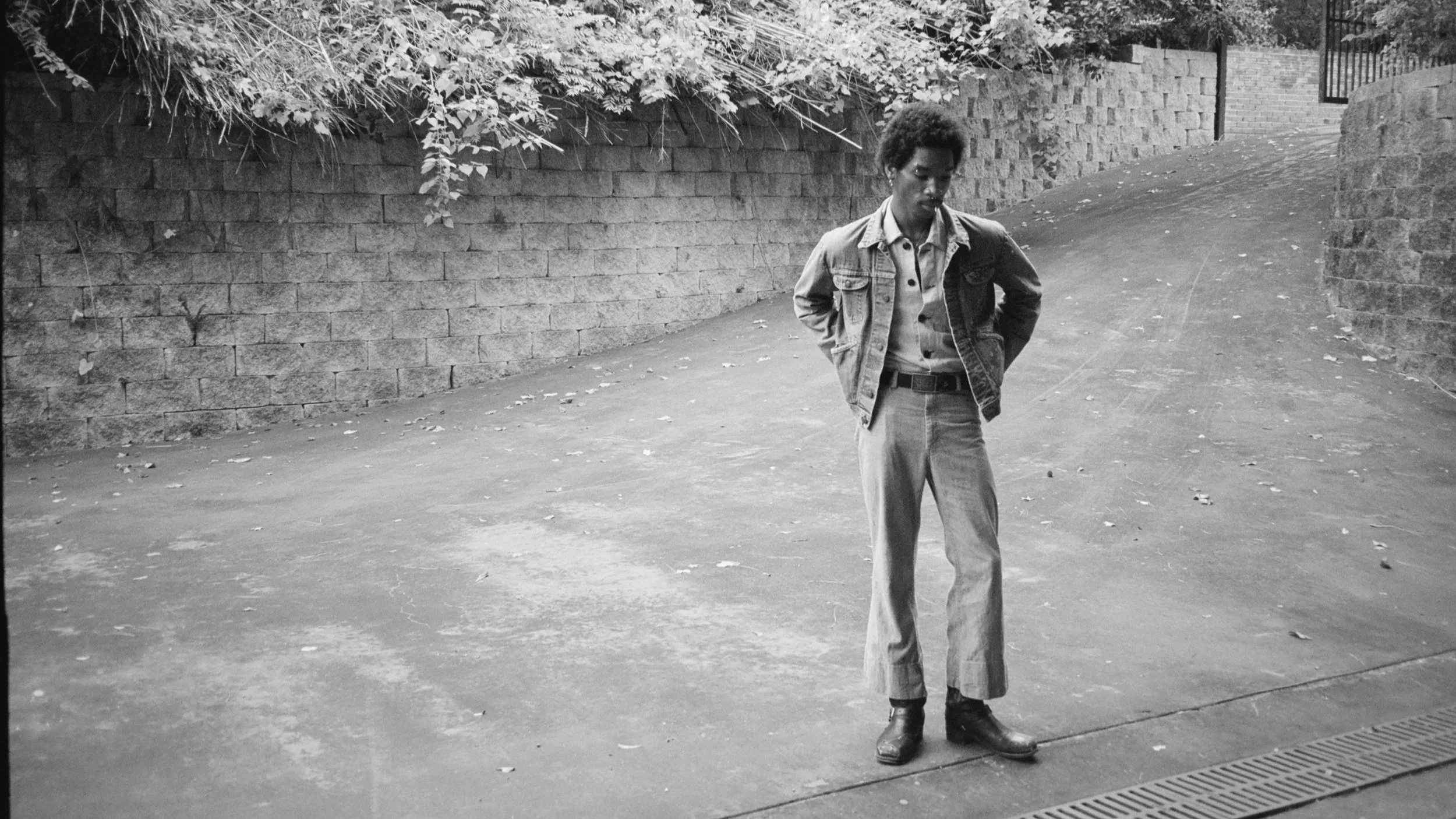
Scarlet House: Vulnerable & Alive

Scarlet House makes music for the exact moment when you should probably stop thinking about someone, but absolutely will not.
The guitars are huge. The vocals feel half-awake. Everything sounds slightly damaged. And underneath all that distortion is a surprising amount of tenderness.
That tension is what makes Scarlet House interesting, and it is also why the interest lasts.
Kameron Odums, the Charlotte, North Carolina artist behind the name, has carved out a space between shoegaze, grunge, alternative R&B, and the darker edges of rock. You can hear Deftones in his music. You can feel the haze of classic shoegaze. But reducing Scarlet House to another artist riding the current guitar revival misses what makes him exciting.
He has soul.
Not “soul” as a genre label. Soul as in feeling.
Odums grew up absorbing more than rock music. His father exposed him to jazz, hip-hop, and gospel, while discovering bands like Coldplay and The Fray in middle school opened another door. He started writing songs in high school, taught himself production, and arrived at a sound where those influences coexist naturally.
That history explains a lot, and it shows up in the music as the emotional range behind Scarlet House’s sound.
Scarlet House does not approach shoegaze like someone who studied a checklist of distortion pedals and Slowdive records. His vocals carry an R&B instinct. His melodies want to be remembered. His guitars might swallow the room, but a human voice still fights through the noise, keeping the feeling at the center and the music more than a genre exercise.
That push and pull became impossible to ignore on Homecoming.
Released in 2024, the 13-song project included “Ghosts,” “Slowing Down,” “Over,” “Search,” “Lost,” and “Set Me Free.” More importantly, it established Scarlet House as more than an internet discovery. Odums wrote, produced, recorded, and mixed the project himself, with limited co-production elsewhere.
A lot of that work happened in his living room, which makes Homecoming’s scale even more striking.
That detail matters because Homecoming still sounds enormous.
“Ghosts” is the obvious gateway. The song takes less than two minutes to make its case. Guitars arrive like weather while Odums’ vocals float through the middle of them instead of trying to overpower the production. It is heavy without becoming metal, dreamy without disappearing into ambiance.
Then there is “Slowing Down,” another track that understands something a lot of modern alternative music forgets: you do not need four minutes to wreck somebody’s mood.
“Over” digs even deeper. Odums has described layering guitar riffs before adding bass, drums, melody, and lyrics. He approached the writing almost like a conversation with himself and God, reflecting on who he had been, who he was, and who he wanted to become.
That choice changes how the distortion feels.
It is not there to hide emotion.
It is there because sometimes emotion is loud.
That distinction becomes even more important when you understand what Odums has lived through. He has spoken publicly about experiencing cancer and homelessness, and about music becoming a form of therapy through those periods. That context gives the darkness in Scarlet House’s music weight and clarifies why the sadness is not aesthetic decoration, but part of the emotional core.
He earned some of those shadows, and that context deepens them.
Now the story is moving forward, and the next chapter is already here.
After releases including “Petals” in 2025, Scarlet House entered 2026 with a new chapter built around Angels, his debut album arriving August 28.
“CHERISH” is the first real signal.
The song revolves around a deceptively simple idea: beautiful things ending does not make them less beautiful. Odums has said he wrote it before the other songs on the album but held onto it because he was worried about releasing it at the wrong moment.
There is something perfectly Scarlet House about that, because even appreciation arrives through hesitation.
Even the song about appreciating the moment had to survive overthinking first.
Then came “RUNNING OUT OF TIME,” which pushes the guitars brighter while keeping the emotional forecast appropriately cloudy. The song centers on knowing a relationship is slipping away while continuing to hold onto it anyway.
Scarlet House apparently has no interest in giving us healthy emotional boundaries.
Good.
The music is better for it.
What makes this moment especially exciting is that Scarlet House is arriving alongside a broader generation dismantling what alternative rock is supposed to look and sound like, and his music helps show why that shift matters. And Black artists belong in that conversation. Not as guests. Not as anomalies. As part of the evolution of the music.
Scarlet House matters because his work does not feel like representation engineered in a marketing meeting. He is simply a Black artist from Charlotte making hazy, emotionally bruised guitar music because that is what comes out when he plugs in, and that honesty is central to the project.
That normalcy might be the most progressive thing about it.
You can place him near artists like Wisp, quannnic, Fleshwater, Loathe, or Amira Elfeky, and you can absolutely hear why Deftones listeners keep finding their way to his music.
But Scarlet House is becoming more interesting as he moves beyond those comparisons.
The voice is getting clearer. The songwriting is getting bigger.
And with Angels approaching, it feels like we are watching an internet-era cult favorite become something harder to ignore.